Idun Agent Platform wraps your agent code into a FastAPI service through framework-specific adapters. You write your agent in the framework you prefer, and the engine handles streaming, checkpointing, guardrails, and observability through a unified API. Each adapter implements a commonDocumentation Index
Fetch the complete documentation index at: https://docs.idunplatform.com/llms.txt
Use this file to discover all available pages before exploring further.
BaseAgent protocol. Your clients talk to the same HTTP API regardless of the underlying framework.
Supported frameworks
LangGraph
Graph-based agents with full AG-UI streaming, checkpointing (in-memory, SQLite, PostgreSQL), and CopilotKit support. Has the most complete feature coverage of the supported frameworks.
Google ADK
Google’s Agent Development Kit for Gemini-powered agents. Supports session and memory services through in-memory, Vertex AI, or database backends.
Feature comparison
| Feature | LangGraph | Google ADK |
|---|---|---|
| AG-UI streaming | Yes | Yes |
| Checkpointing / memory | In-memory, SQLite, PostgreSQL | In-memory, Vertex AI, Database |
| CopilotKit support | Yes | No |
| Guardrails | Yes | Yes |
| Observability | Yes | Yes |
| MCP tool governance | Yes | Yes |
How adapters work
Under the hood, the engine loads your agent through the adapter specified in your configuration. This gives you:- Unified API: All agents expose the same HTTP endpoints for invoke, streaming, and chat.
- Shared platform features: Observability, guardrails, MCP tools, and memory work the same way across frameworks.
- Consistent deployment: Run agents through the Idun Agent Engine standalone or managed by the Agent Manager.
- Manager UI
- Config file
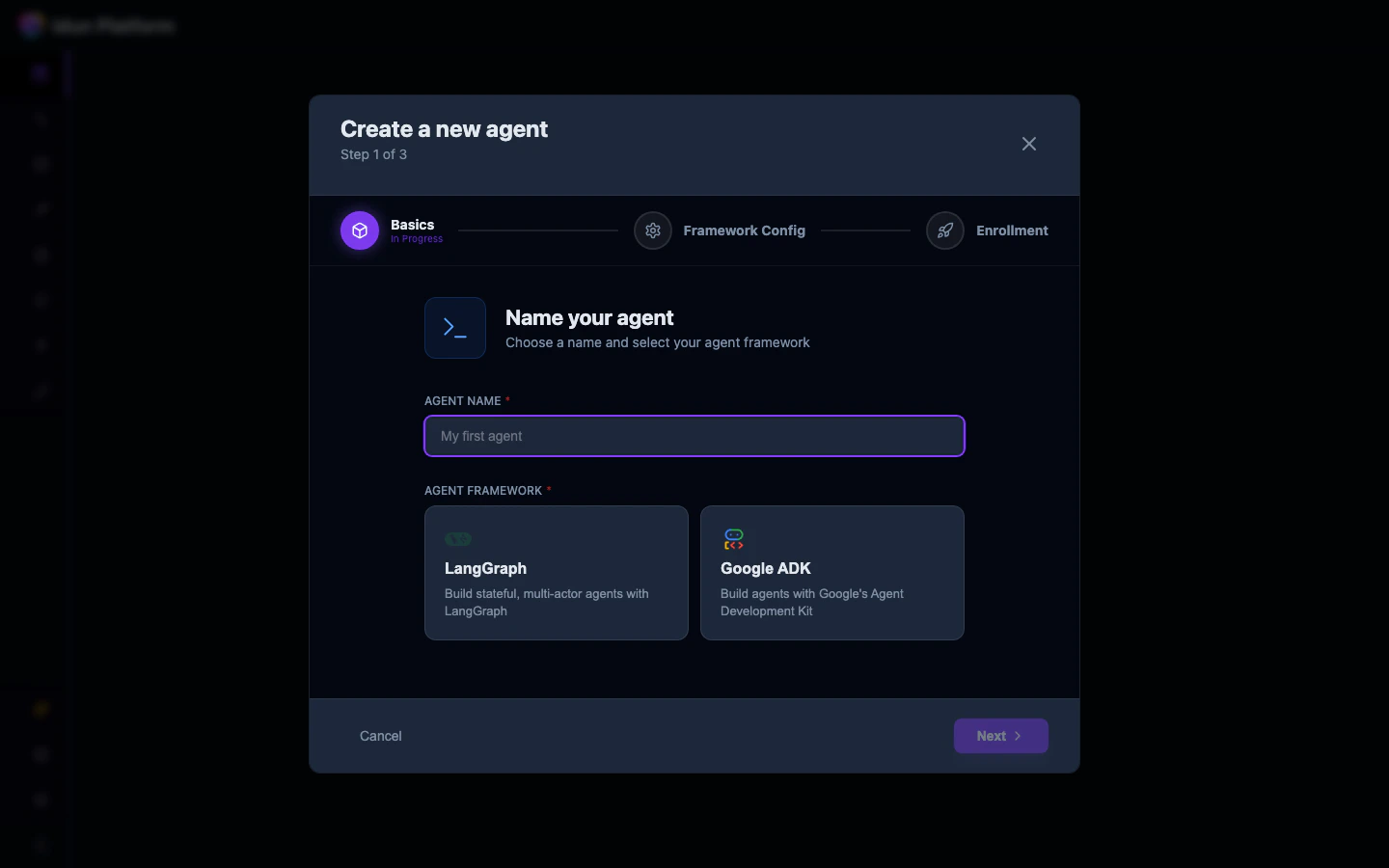
In the agent creation wizard, Step 1 asks you to select a framework: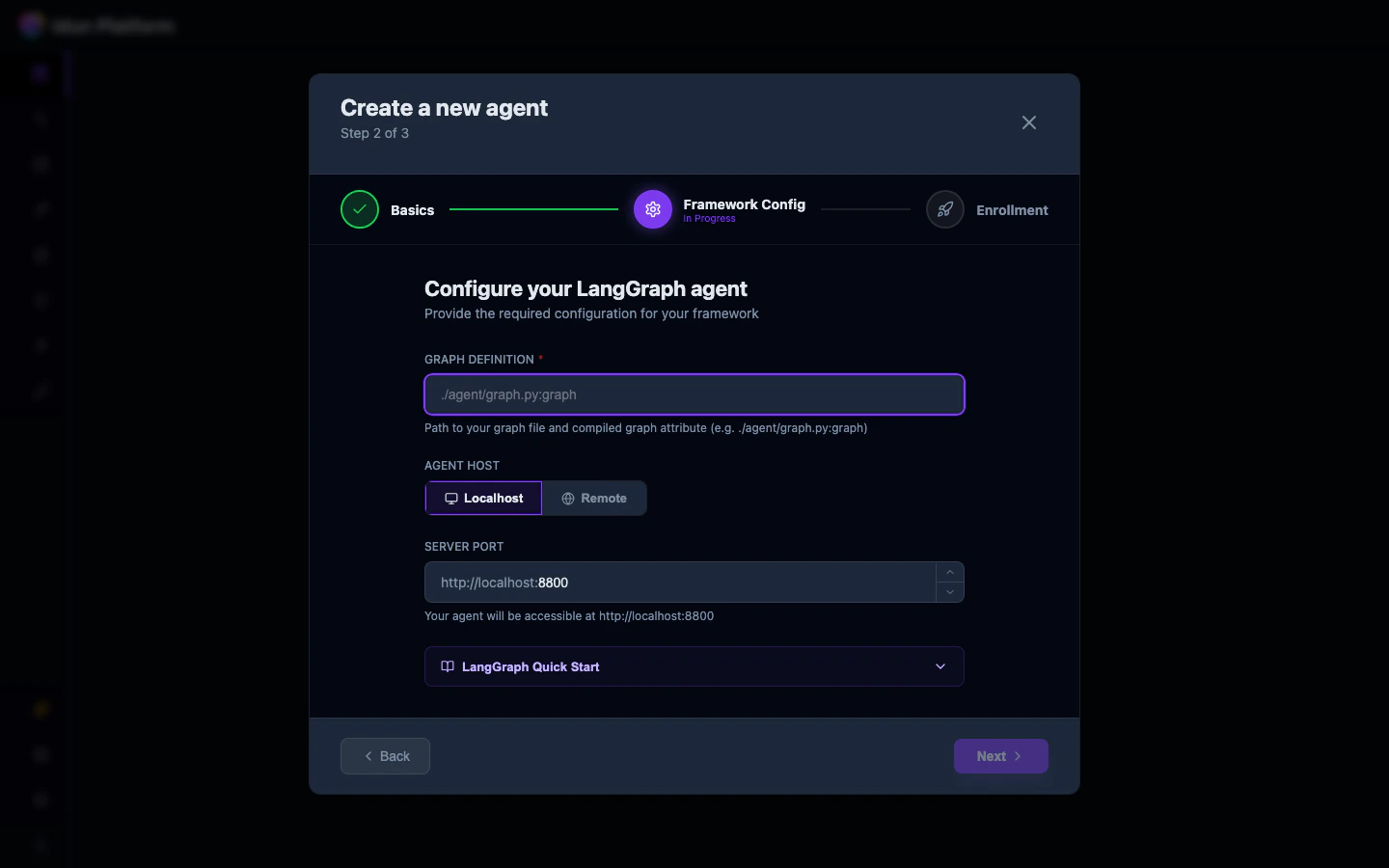
- LangGraph: Build stateful, multi-actor agents with LangGraph
-
Google ADK: Build agents with Google’s Agent Development Kit